
What Is Pollo Asado? Marinade, Flavour & Cooking Guide
By La Rio's Fresh Mexican Grill · Last updated 2026-08-05 · 7 min read
Catering guides based on our current menus, delivery policies and documented events.
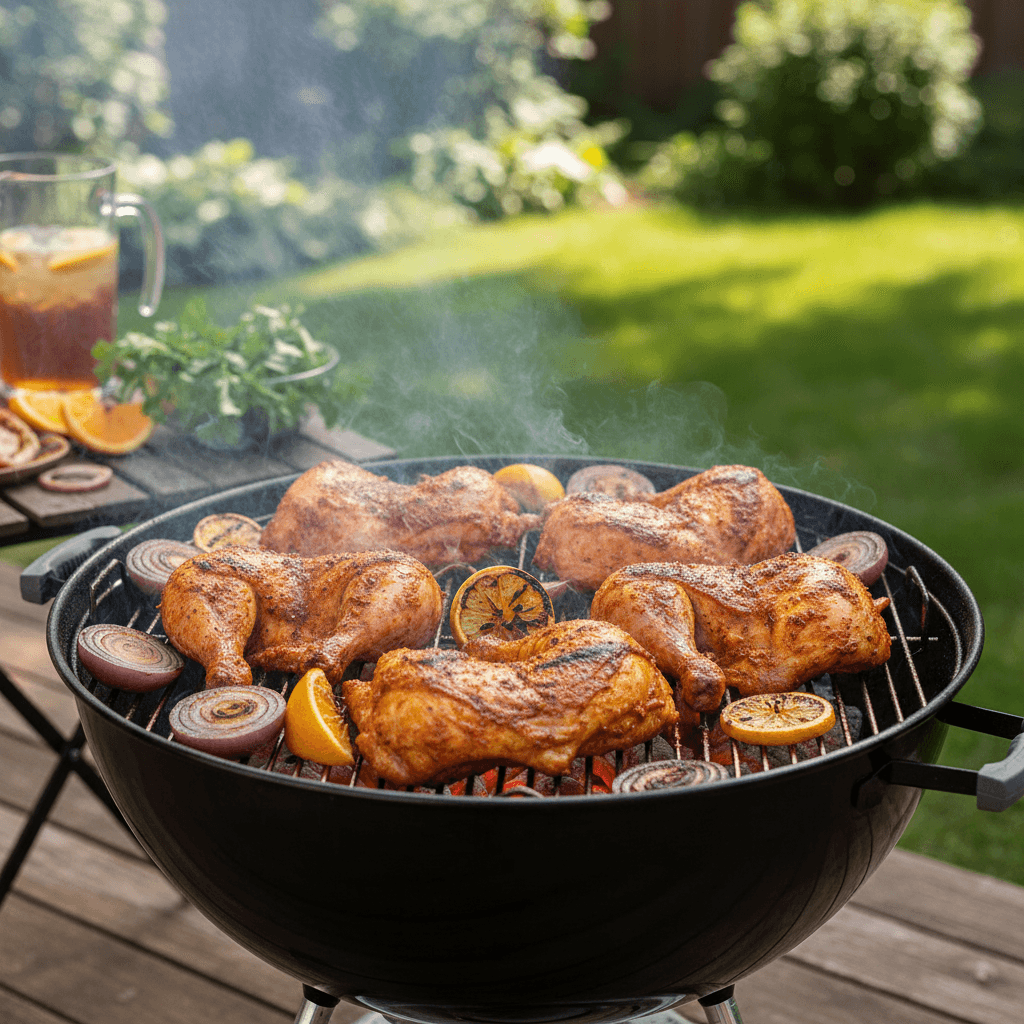
Pollo asado means roasted or grilled chicken in Spanish. In Mexican and Latin American cooking, the name commonly describes chicken seasoned with citrus, garlic, herbs and warm spices, then cooked over high heat or roasted until the surface browns. Recipes differ by region and cook, so there is no single universal marinade.
The recognizable result is savoury, bright and lightly smoky: juicy chicken with caramelized edges that can be served in tacos, bowls, salads or family-style platters.
What does pollo asado taste like?
A typical pollo asado marinade balances four elements:
- Citrus: orange and lime add acidity, fragrance and a fresh finish.
- Aromatics: garlic and onion build the savoury base.
- Herbs and spices: oregano, cumin, black pepper and chile add warmth.
- Oil and salt: oil coats the chicken and supports browning, while salt seasons the meat.
Achiote or annatto is common in some versions. It gives the chicken a red-orange colour and mild earthy flavour. Other versions use paprika or dried chiles. The ingredient list should be treated as a flexible pattern, not a claim that every restaurant or family uses the same recipe.
A practical pollo asado marinade
For about 1 kilogram of chicken, a home marinade can use orange juice, lime juice, neutral oil, minced garlic, dried oregano, ground cumin, black pepper, salt and optional achiote paste or paprika. Whisk the ingredients until combined, coat the chicken evenly, cover and refrigerate.
Boneless thighs often need only a few hours. Bone-in pieces can be marinated longer, but highly acidic marinades can soften the outside of the meat when left too long. Four to 12 hours is a practical range for most cuts. Always marinate chicken in the refrigerator, not on the counter.
Do not reuse raw marinade
Marinade that touched raw chicken can contain harmful bacteria. If you want a finishing sauce, reserve a separate clean portion before adding the chicken. Otherwise, discard the used marinade. Keep raw poultry, utensils and cutting boards separate from ready-to-eat food.
How to cook pollo asado on a grill
- Preheat the grill. Create a hotter direct zone for colour and a lower indirect zone for finishing thicker pieces.
- Remove excess marinade. Let extra liquid drip away so it does not cause heavy flare-ups.
- Brown the chicken. Place it over direct heat long enough to create grill marks and caramelized edges.
- Finish gently. Move thick or bone-in pieces to the cooler zone and close the lid.
- Check the temperature. Insert a clean instant-read thermometer into the thickest part without touching bone.
- Rest before slicing. A short rest helps the juices settle and makes the chicken easier to cut for tacos or bowls.
Exact cooking time depends on the cut, thickness, grill temperature and weather. Temperature is a safer guide than a fixed number of minutes.
How to cook pollo asado in the oven
Heat the oven to about 220°C or 425°F. Arrange the marinated chicken on a rack over a lined sheet pan so hot air can circulate. Roast until browned and safely cooked through. A brief broil at the end can add colour, but watch closely because citrus and spices can darken quickly.
For boneless pieces, a heavy skillet can also work: brown the chicken on the stovetop, lower the heat and finish gently. Avoid crowding the pan, which traps steam and reduces browning.
Safe internal temperature for chicken
Health Canada lists 74°C (165°F) for chicken pieces and 82°C (180°F) for whole poultry. Check the thickest part with a digital food thermometer. You can verify the current guidance on Health Canada's safe internal cooking temperatures page.
Colour alone is not a reliable safety test. Marinades containing achiote, paprika or chile can make cooked meat look pink or red, while a browned exterior can develop before the centre reaches a safe temperature.
Best chicken cuts for pollo asado
| Cut | Why choose it | Planning note |
|---|---|---|
| Boneless thighs | Juicy and quick to portion | Good for tacos and bowls |
| Bone-in thighs or drumsticks | Forgiving on the grill | Allow more time to cook through |
| Chicken breast | Lean and easy to slice | Watch temperature closely to avoid drying |
| Whole chicken | Family-style presentation | Use the higher whole-poultry temperature |
Common pollo asado mistakes
- Using only high heat: the exterior can burn before thick pieces are cooked. Use direct and indirect zones.
- Cooking by time alone: thickness and equipment vary. Use a thermometer.
- Overcrowding: tightly packed pieces steam instead of brown.
- Reusing raw marinade: reserve a clean portion before it touches chicken.
- Slicing immediately: let the meat rest briefly before cutting.
- Ignoring venue or holding time: when serving a group, plan how the chicken will stay safely hot and how guests will move through the line.
How to serve pollo asado
Slice the cooked chicken across the grain and pair it with warm tortillas, rice, beans, pico de gallo, corn, cilantro, lime and salsa. For a group, place the components in separate trays so guests can build tacos or bowls and choose the toppings they prefer.
If cooking for a crowd is not practical, compare the current La Rio's catering menu, the Toronto taco-bar package, or all Mexican catering formats. La Rio's standard catering service is hot delivery with basic setup for self-service; it is not an on-site cooking station.
Pollo asado: the short version
Pollo asado is citrus-and-spice-marinated chicken that is grilled or roasted until browned and juicy. The exact seasoning changes from recipe to recipe. Use controlled heat, prevent cross-contamination, and verify a safe internal temperature with a thermometer before serving.